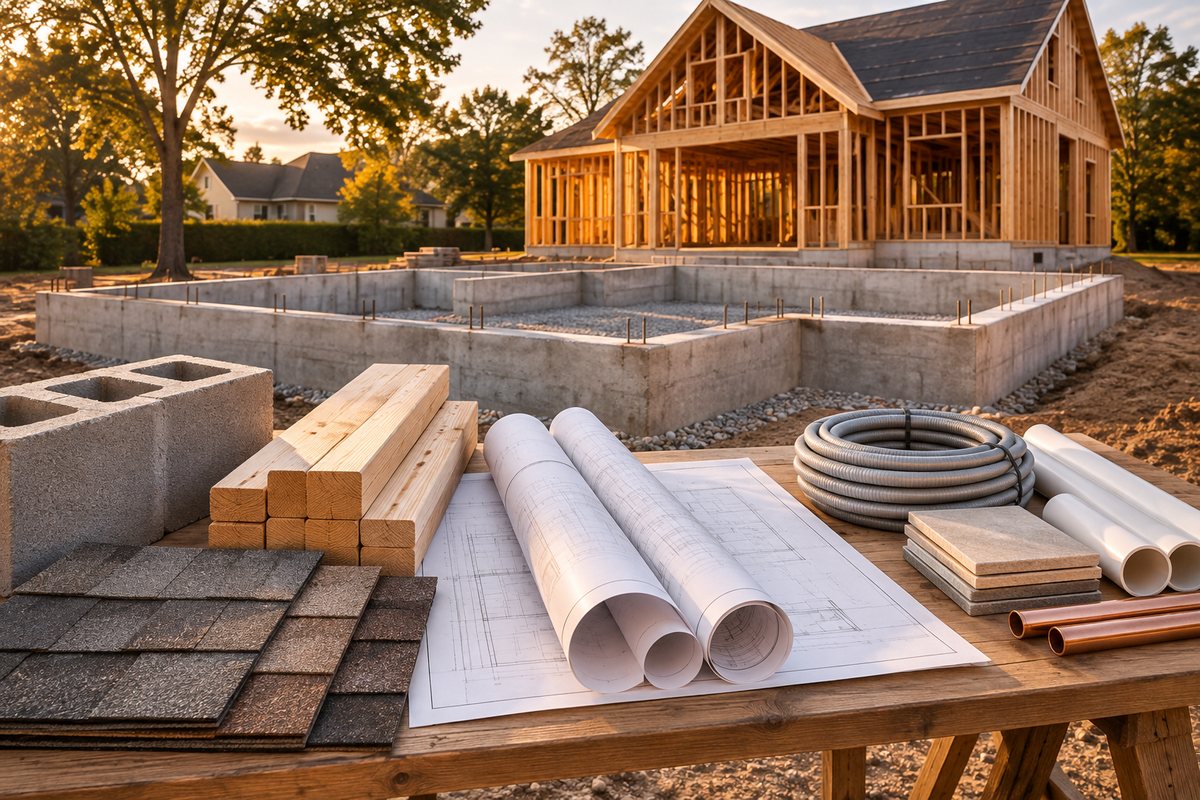
Build the budget around completion
A construction budget should answer a simple question: what cash is required to deliver the finished, usable property and carry it to repayment? The contractor's proposal is a major input, but it rarely answers the entire question. Investors need a complete cost structure that connects the physical work to the business plan.
Hard costs generally cover physical construction. Soft costs can include design, engineering, permits, professional services and financing-related items. Land, carrying costs, marketing, leasing and reserves may appear in additional categories. Use clearly defined labels so the same item is neither omitted nor counted twice when lender and contractor templates differ.
Expose exclusions before construction
Review demolition, grading, utility connections, landscaping, appliances, site security, testing and cleanup. Ask whether sales taxes, contractor overhead and profit are included. Confirm who pays for temporary power, insurance and reinspection. An exclusion in a construction contract does not remove the expense from the investor's project.
Assign each cost an evidence level: signed agreement, current proposal, professional estimate or preliminary allowance. The budget is stronger when the largest uncertain items are visible. A precise-looking total assembled from unverified allowances can be less useful than a clearly explained range with an appropriate contingency.
Keep contingency distinct from known work
Suppose land is $150,000, construction is $300,000, soft costs are $35,000 and financing and carry are $25,000. The subtotal is $510,000. Adding an illustrative $30,000 contingency produces a $540,000 project budget. That contingency should cover uncertainty, not a known utility bill that was left out of the base estimate.
If the lender excludes some costs from its eligible basis, the required borrower cash may exceed a simple percentage of the total budget. Obtain a reconciliation between the investor's all-in cost and the lender's recognized cost. Track contingency draws with an approval record so the remaining reserve reflects actual remaining uncertainty.
Review the budget as the scope evolves
Use a current schedule of values and a change-order log. When a line increases, identify whether another line truly decreased or whether total project cost has grown. Moving dollars between categories does not create additional cash. Compare the remaining funded budget with the estimated cost to complete, including unpaid invoices and committed work.
The final budget should have an owner for every line and a funding source for every phase. It should also include the cost of reaching the exit, not merely the certificate of occupancy. That means sale expenses for a resale or lease-up and permanent-loan costs for a rental hold. A complete budget turns a construction estimate into an investment tool and gives the team a common language for managing changes.
Use a cost-to-complete report
At each major milestone, list original budget, approved changes, spent cash, unpaid commitments and estimated remaining work. Compare total projected final cost with available funding. The remaining loan balance alone is not the same as available funding if some amounts are reserved for interest or other uses.
Review allowances as selections become final. If several allowances consistently prove low, reassess the remaining ones instead of waiting for each to become a change order. Include contractor and professional input so the forecast reflects actual procurement and site conditions.
A contingency should decline as uncertainty is resolved, but not simply because the team wants to preserve the original total. If the known cost increases, show it. Transparent reporting allows the investor to consider scope changes, new equity or a revised exit early. It also creates a useful record for future projects by showing where preliminary estimates differed from actual delivery and which budget categories need stronger evidence next time.
Reference desk: cost categories are a control system
Budget categories should make responsibility and remaining work understandable. A hard-cost line describes physical delivery, while soft costs often support design, approvals and professional services. Financing and carry connect the work to its timeline. The exact labels can vary, so reconcile definitions when moving between contractor, lender and investor worksheets.
Avoid a large miscellaneous category for material items. It can conceal scope that has not been priced or assigned. Break significant allowances into components and obtain better evidence as the project advances. A realistic range is more informative than a precise number with no supporting source.
Identify costs that are fixed by agreement and costs that remain variable. A fixed-price contract may still contain exclusions, allowances and change provisions. Review what the agreement actually fixes with qualified assistance. The investment model should not assume every project expense has become certain because one contract uses a fixed-price description.
Separate known scope changes from contingency. Once a change is approved, move its amount into the revised budget and reduce available contingency if that is the funding source. Continuing to show both the full contingency and the added work can overstate remaining protection. Track the decision and the resulting balance clearly.
At each milestone, compare forecast final cost with total committed resources, including available equity. If a shortfall appears, resolve it through a documented plan rather than delaying invoices or hoping another category finishes below budget. A useful budget supports timely decisions, preserves trust with contractors and gives the investor a current view of the cash required to deliver a finished, marketable property.
Select the three largest budget allowances and replace them with better evidence before committing, then update the contingency and total equity requirement without hiding the change.
Sources, further reading and editorial notes
- NCUA: Construction and Development Loans
Construction feasibility, contingencies, monitoring and completion risk.
- OCC: Commercial Real Estate
Commercial lending risk-management background.
- Federal Reserve: Prudent CRE Loan Accommodations and Workouts
Valuation premises and context for income-based commercial analysis.
Prepared November 12, 2026 for the labeled 2026 edition. The sources provide background; worked examples are original, hypothetical and rounded.
Investor education, not an offer or commitment to lend. All deal examples are hypothetical and rounded. Terms, eligibility and availability vary. Obtain appropriate legal, tax, insurance and local professional advice for your circumstances. Editorial illustrations are AI-generated and do not depict listed properties.
KEEP THE COMPLETE ISSUE
From Ground to Growth
All 12 articles, the editorial introduction and the investor workbook in one 29-page PDF.
Download September 2026 PDF