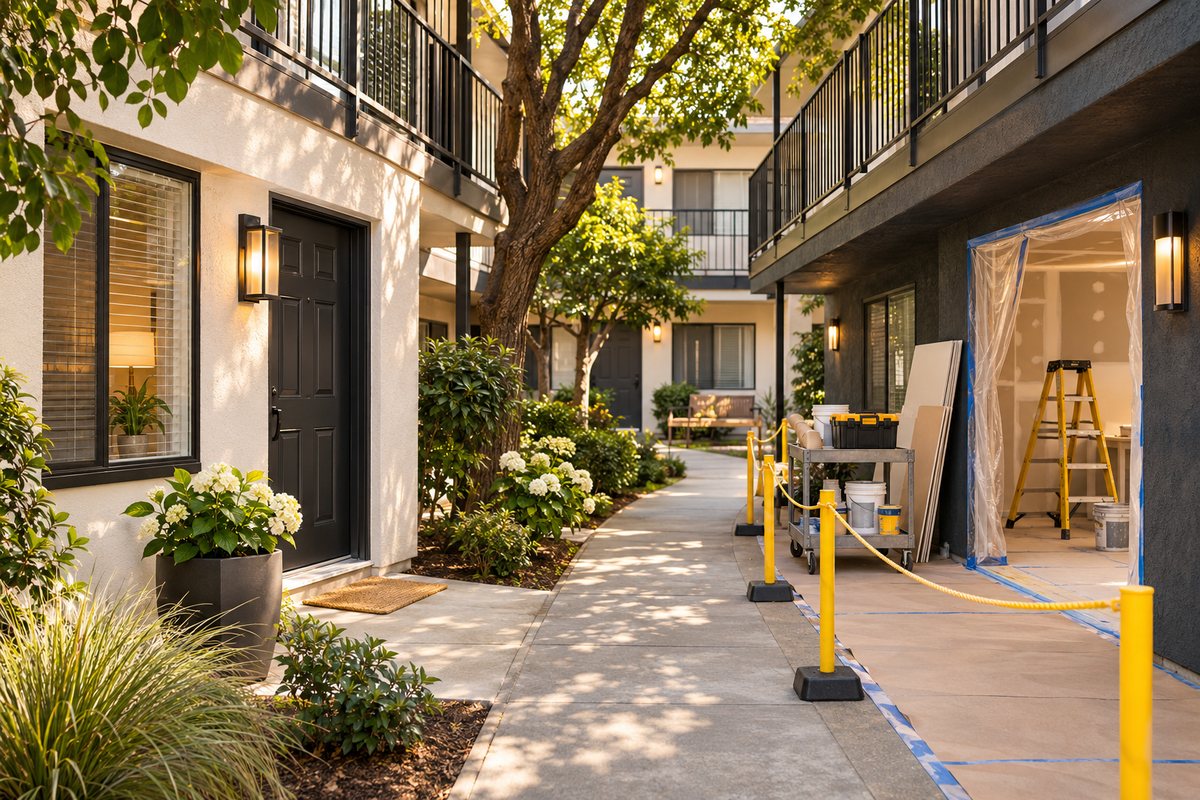
Improvements compete for cash with operations
An apartment renovation can improve living conditions, reduce maintenance and support stronger income. During the work, however, vacancy, contractor payments and temporary disruption can reduce available cash. The plan should connect physical improvements with the building's ability to keep operating.
Separate essential repairs, property-wide capital work and optional unit upgrades. Prioritize safety and functionality. Review leases, notice requirements, permits and other applicable rules with appropriate professionals. The ability to renovate a unit does not automatically establish the right or timing to change a resident's occupancy or rent.
Model one unit before scaling the plan
Suppose a hypothetical unit upgrade costs $12,000 and is expected to support $150 more monthly rent. The gross annual increase is $1,800. Before estimating return, include extra operating costs, vacancy during work, leasing expense and ongoing maintenance differences. A gross-rent payback calculation alone is incomplete.
If the unit is vacant for six weeks at a prior $1,200 monthly rent, approximately $1,800 of foregone rent joins the direct work cost before other carry. Actual calendar treatment varies, but the principle is clear: the economic investment includes time without collections. Use a pilot unit to validate costs, duration and demand before repeating the same scope across the property.
Pace the rollout around liquidity
Renovating several units simultaneously can create contractor efficiencies while concentrating income loss and payment demands. Model the minimum occupied income and maximum cash exposure at each stage. A slower sequence may protect operations even if completion takes longer.
Keep property-wide systems work in the same capital schedule. A unit-renovation plan that consumes all available cash can leave the owner unprepared for a roof or plumbing obligation. Align lender draw conditions and reserve releases with contractor payments, and confirm approval requirements before changing scope.
Measure the actual outcome
Track direct cost, vacancy days, final rent, concessions, maintenance issues and resident feedback for each completed unit. Compare net operating improvement with the original underwriting. If higher rent requires longer vacancy or repeated concessions, the headline increase may overstate the result.
The strongest value-add plan improves the property while preserving the ability to serve residents and pay obligations. Maintain a contingency, update the remaining cost to complete and revisit the financing exit when the rollout changes. A measured renovation program can create durable operating benefits. It becomes more reliable when growth in projected NOI is supported by completed work, actual leases and a cash plan that remains funded throughout the transition.
Set a pilot-unit decision gate
Before approving the next renovation phase, compare the pilot's actual cost, completion days, concessions and achieved rent with the model. Identify whether any result is seasonal or unusual. One successful lease is useful evidence, but not proof that every unit will perform identically.
Define the minimum cash balance and maximum simultaneous vacancy the rollout will permit. If either limit is breached, pause and revise the sequence. This is an operating control rather than a prediction that the project will fail. It preserves options while the team learns.
Keep resident service and common-area maintenance funded during the improvements. Deferred routine work can undermine the property's appeal while renovated units are being marketed. The strongest program improves both the physical product and the reliability of operations. That combination supports a more durable income gain and gives prospective permanent lenders clearer evidence of a functioning property rather than only a projection of future rent.
Reference desk: value-add needs a funded bridge to stabilization
The value-add thesis usually depends on spending money before receiving the full income benefit. That creates a bridge of time, vacancy and capital. Model the bridge explicitly so the property can continue meeting obligations while improvements are underway.
Separate direct work costs from lost rent, leasing, concessions, financing and other carry. A unit renovation can have a positive long-term effect while requiring more initial cash than the contractor invoice suggests. Compare the net operating improvement with the complete investment and the expected hold.
Use a phased schedule with decision gates. After the first units, review actual costs, duration and rents. If results differ, revise later phases before committing the full budget. A pilot is valuable because it produces evidence that can improve both scope and financing discussions.
Keep building-wide capital needs funded. Unit upgrades can be visible and marketable, but roofs, drainage and major systems may be more urgent. A balanced plan serves the whole property and avoids creating attractive interiors in a building with unresolved common-system obligations.
Respect resident and legal considerations throughout the process. Lease terms, notices, access, relocation and rent changes can involve specific requirements. Obtain qualified local guidance. The operating plan should improve the property while maintaining lawful, consistent and respectful practices.
Evaluate the permanent-financing exit using achieved results as they develop. A lender may require a particular level of stabilization or documentation. Do not assume a projected NOI increase immediately converts into lendable proceeds. Keep enough liquidity for a longer transition and a smaller take-out loan. The strongest renovation program creates both a better physical asset and a more credible operating record, giving the investor durable options rather than a result dependent on a single optimistic refinance date.
Compare the first renovated unit's actual cost, downtime and achieved rent with the model before repeating the scope, adjusting the rollout to preserve liquidity and resident service.
Sources, further reading and editorial notes
- Fannie Mae: General Property Eligibility
One-to-four-unit property eligibility and legal-use framework.
- Fannie Mae: Conventional Properties Term Sheet
Five-or-more-unit multifamily category and example third-party report requirements.
- Freddie Mac Multifamily: Get Started
Multifamily financing category beginning with five dwelling units.
- HUD: Fair Housing Rights and Obligations
General housing-provider responsibilities; local rules require separate review.
- Federal Reserve: Prudent CRE Loan Accommodations and Workouts
Valuation premises and context for income-based commercial analysis.
Prepared November 12, 2026 for the labeled 2026 edition. The sources provide background; worked examples are original, hypothetical and rounded.
Investor education, not an offer or commitment to lend. All deal examples are hypothetical and rounded. Terms, eligibility and availability vary. Obtain appropriate legal, tax, insurance and local professional advice for your circumstances. Editorial illustrations are AI-generated and do not depict listed properties.
KEEP THE COMPLETE ISSUE
Multifamily: The Next Door
All 12 articles, the editorial introduction and the investor workbook in one 29-page PDF.
Download November 2026 PDF