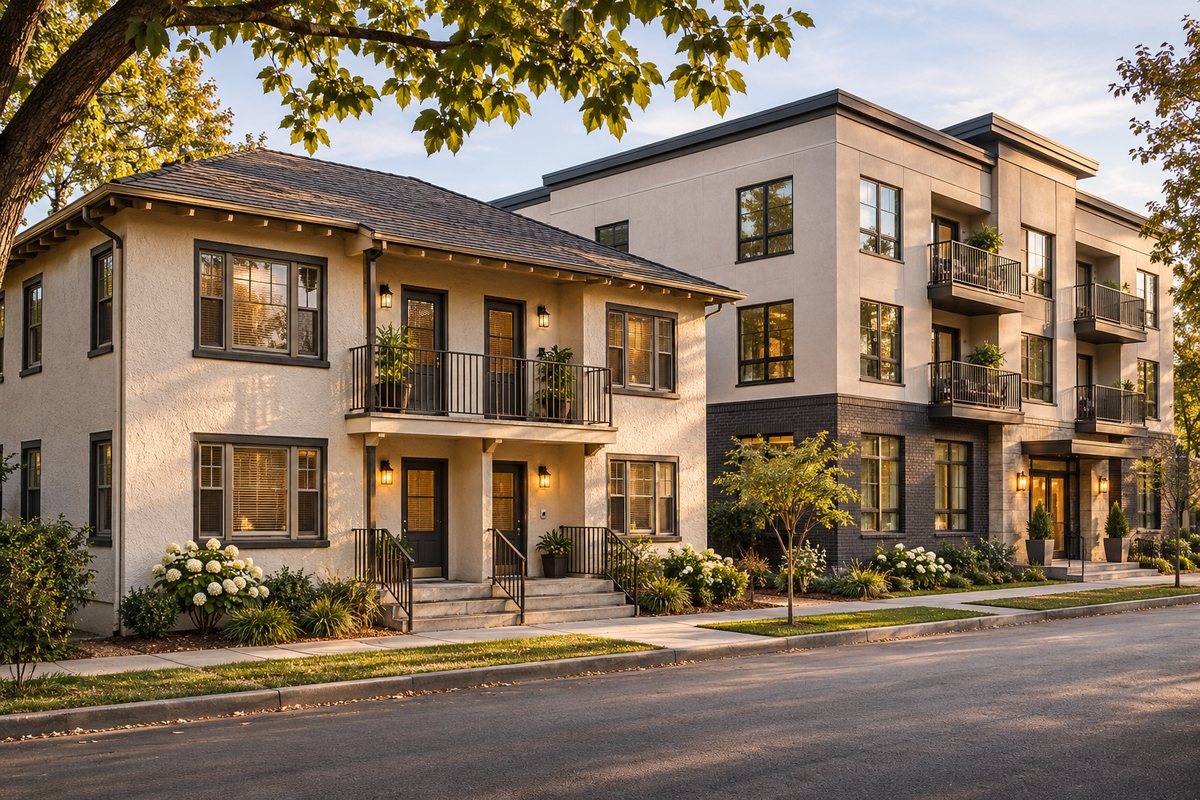
The fifth unit changes the financing conversation
Moving from a fourplex to a five-unit property is a small change in door count and a potentially significant change in lending category. Many one-to-four-unit residential programs stop at four units. Five-or-more-unit properties generally enter commercial multifamily financing, where property operations and sponsor capacity receive a different form of analysis.
This distinction does not mean every five-unit building qualifies for the same commercial product. Loan size, location, condition, occupancy, borrower experience and lender appetite still matter. Some lenders serve very small apartment properties; others have minimum loan sizes or other criteria that make a particular building impractical for their programs.
Expect a different income analysis
Residential DSCR products may compare qualifying rent with PITIA. Apartment lenders more commonly underwrite an annual operating statement and calculate coverage using underwritten NOI or net cash flow against annual debt service. They may adjust expenses and include replacement-reserve requirements under their methodology. Ask for the actual definitions.
An apartment with $100,000 of annual rent does not have $100,000 available for loan payments. Vacancy, collection losses, utilities, maintenance, management, taxes and insurance come first in the operating analysis. The investor should be able to explain each line and provide support for both history and projected changes.
Review the entire commercial structure
Commercial terms can include a shorter maturity than the amortization schedule, reporting obligations, reserve accounts, guarantees and specific prepayment provisions. Recourse treatment varies. A nonrecourse description should be reviewed for exceptions and other obligations with qualified counsel. Neither bank nor agency terminology should be used as a substitute for reading the actual documents.
Third-party reports may include appraisal, environmental and property-condition work, depending on the lender and program. These costs can be meaningful relative to a small loan. Ask for the full transaction budget and timeline before assuming a five-unit acquisition will close like a previous fourplex purchase.
Prepare the sponsor as well as the property
Organize operating experience, liquidity, net worth, ownership structure and management arrangements. A growing investor can improve readiness by maintaining strong records on existing holdings and selecting a capable operating team. Do not inflate experience; explain how execution gaps will be addressed.
The transition works best when treated as a new financing discipline with familiar real-estate fundamentals. Start discussions before the contract timetable becomes tight. Compare several appropriate lender categories and identify the controlling loan-size constraint. The fifth door can open a worthwhile next stage, provided the investor budgets for a different diligence process and builds the reporting and capital capacity to own an apartment business.
Budget for the commercial transaction
Obtain estimates for lender, legal, appraisal, environmental, property-condition and settlement costs appropriate to the proposed financing. Some costs may be paid before approval and may not be refundable. The full transaction budget can materially affect a small apartment acquisition.
Ask the lender about minimum loan size, required operating history, sponsor experience, reserves and timeline. A five-unit property may be commercial by category while still being too small or otherwise unsuitable for a particular lender. Compare appropriate alternatives instead of assuming the first unavailable program means the property has no financing path.
Prepare a reporting plan before closing. Commercial ownership may require periodic financial statements, rent rolls and compliance information under the loan documents. Assign responsibility and keep records current. The transition beyond four units is easier when the investor treats underwriting and ongoing reporting as connected parts of operating the business, rather than as paperwork that ends when the acquisition funds.
Reference desk: commercial does not mean uniform
The commercial multifamily category includes many property sizes and business plans. A stabilized five-unit building, a transitional twenty-unit property and a large apartment community can require different lender types, diligence and sponsor capacity. Begin with the property's size, condition, occupancy and requested loan rather than a generic commercial rate request.
Agency multifamily programs are one possible category, with specific eligibility and lender channels. Banks, credit unions and private lenders may provide other structures. Published minimum unit counts do not establish that every qualifying building will be accepted or that a small requested loan is economical. Review actual requirements and transaction costs.
Income underwriting often moves from gross rent toward normalized operating income or net cash flow. The lender may adjust vacancy, management, expenses and reserves. Provide historical statements and a current rent roll, then explain projected changes separately. Unsupported future income should not be presented as in-place performance.
The legal loan structure can also differ from a previous residential transaction. Review maturity, amortization, guarantees, reporting, reserves and prepayment provisions with appropriate help. A nonrecourse description can include exceptions and other obligations. A long amortization schedule does not eliminate a shorter balloon maturity.
Third-party diligence should be coordinated with the lender while preserving the buyer's own review. Appraisal, environmental and property-condition work can have specific engagement and acceptance requirements. Ask who orders each report, its scope, cost and timing before spending money on an unsuitable version.
For the growing investor, the most useful preparation is accurate reporting on existing holdings, a clear liquidity schedule and a capable management plan. The transition beyond four units is not simply a larger down payment. It is an opportunity to build a more formal operating business, supported by financing and records appropriate to the property being acquired.
Obtain the commercial lender's full transaction checklist and cost estimate before relying on a five-unit financing assumption based on terms previously discussed for a fourplex purchase.
Sources, further reading and editorial notes
- Fannie Mae: General Property Eligibility
One-to-four-unit property eligibility and legal-use framework.
- Fannie Mae: Conventional Properties Term Sheet
Five-or-more-unit multifamily category and example third-party report requirements.
- Freddie Mac Multifamily: Get Started
Multifamily financing category beginning with five dwelling units.
- HUD: Fair Housing Rights and Obligations
General housing-provider responsibilities; local rules require separate review.
- Federal Reserve: Prudent CRE Loan Accommodations and Workouts
Valuation premises and context for income-based commercial analysis.
Prepared November 12, 2026 for the labeled 2026 edition. The sources provide background; worked examples are original, hypothetical and rounded.
Investor education, not an offer or commitment to lend. All deal examples are hypothetical and rounded. Terms, eligibility and availability vary. Obtain appropriate legal, tax, insurance and local professional advice for your circumstances. Editorial illustrations are AI-generated and do not depict listed properties.
KEEP THE COMPLETE ISSUE
Multifamily: The Next Door
All 12 articles, the editorial introduction and the investor workbook in one 29-page PDF.
Download November 2026 PDF